Technology
Exoskeletons on the job site: support, not superpowers
Wearable support can change how demanding work feels. What passive exoskeletons can offer—and what a sensible workplace trial should check.
The short version
Treat an exoskeleton as one possible ergonomic aid. Fit, task compatibility and a safe trial matter more than the promise of effortless work.
The problem behind the equipment
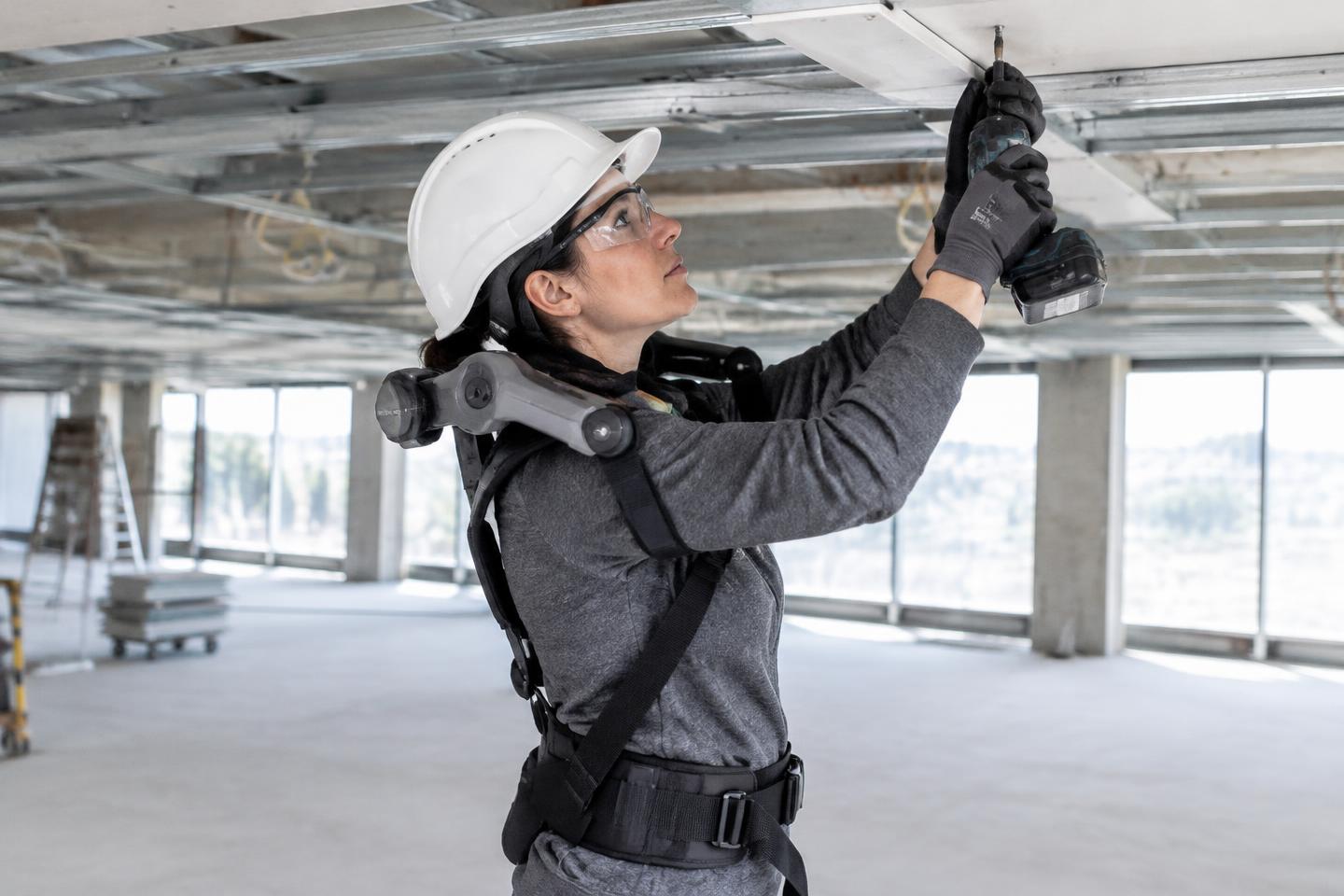
Repeated overhead work can place a sustained load on shoulders and arms. Construction, installation and maintenance tasks often combine awkward posture with tools that must be held in position.
Reducing that load is an ergonomic goal. A wearable support device is one option, alongside task redesign, lifting aids, suitable tools and appropriate work organization.
How passive support works
Passive exoskeletons use mechanical components such as springs or elastic elements rather than powered motors to assist a particular movement or posture. Depending on the design, they can redistribute some load through other parts of the body.
They do not make tools or materials weightless. Support depends on the device, fit, working posture and task. A shoulder-support device that helps with one job may be cumbersome during another.
What to check before a trial
A useful trial starts with a specific task and an appropriate assessment. Involve the workers who will wear the device, as well as safety and occupational-health expertise.
- Fit and comfort: adjustability, heat, pressure points and movement.
- Task compatibility: ladders, confined spaces, lifting and transitions between tasks.
- Safety: snagging risks, emergency removal and compatibility with required protective equipment.
- Evidence: observed comfort and usability, not just a vendor demonstration.
- Upkeep: inspection, cleaning, training and replacement parts.
A device is not a safety program
Support equipment should not be used to justify heavier loads or remove breaks. It also should not replace safer work methods when the task can be redesigned.
Assess whether it shifts discomfort to another part of the body, restricts balance or creates new hazards. Stop a trial if workers report pain, impaired movement or difficulty completing the job safely.
Technology that complements people
The most useful workplace technology often supports a person rather than replacing them. Wearable assistance is an example worth evaluating carefully, without assuming it is right for every job site.
Ask for device-specific evidence and test against a clear baseline. The goal is better work—not a futuristic appearance.
Editorial note
Adapted from the original tool-tech seed. Unsupported adoption, injury-reduction and 2026 standard-equipment predictions have been removed. This article is general context, not a device review or safety recommendation.
Put the idea to work.
Explore skilled careers where tools and human judgment work together.
Explore related careers