Human advantage
Plumbing and the human advantage
A pipe in a cramped basement is not a tidy digital task. Why physical dexterity and judgment still matter in an AI-shaped workplace.
The short version
Resilience comes from a combination of physical skill, diagnosis and accountability—not from being untouched by technology.
Why a service call is hard to automate
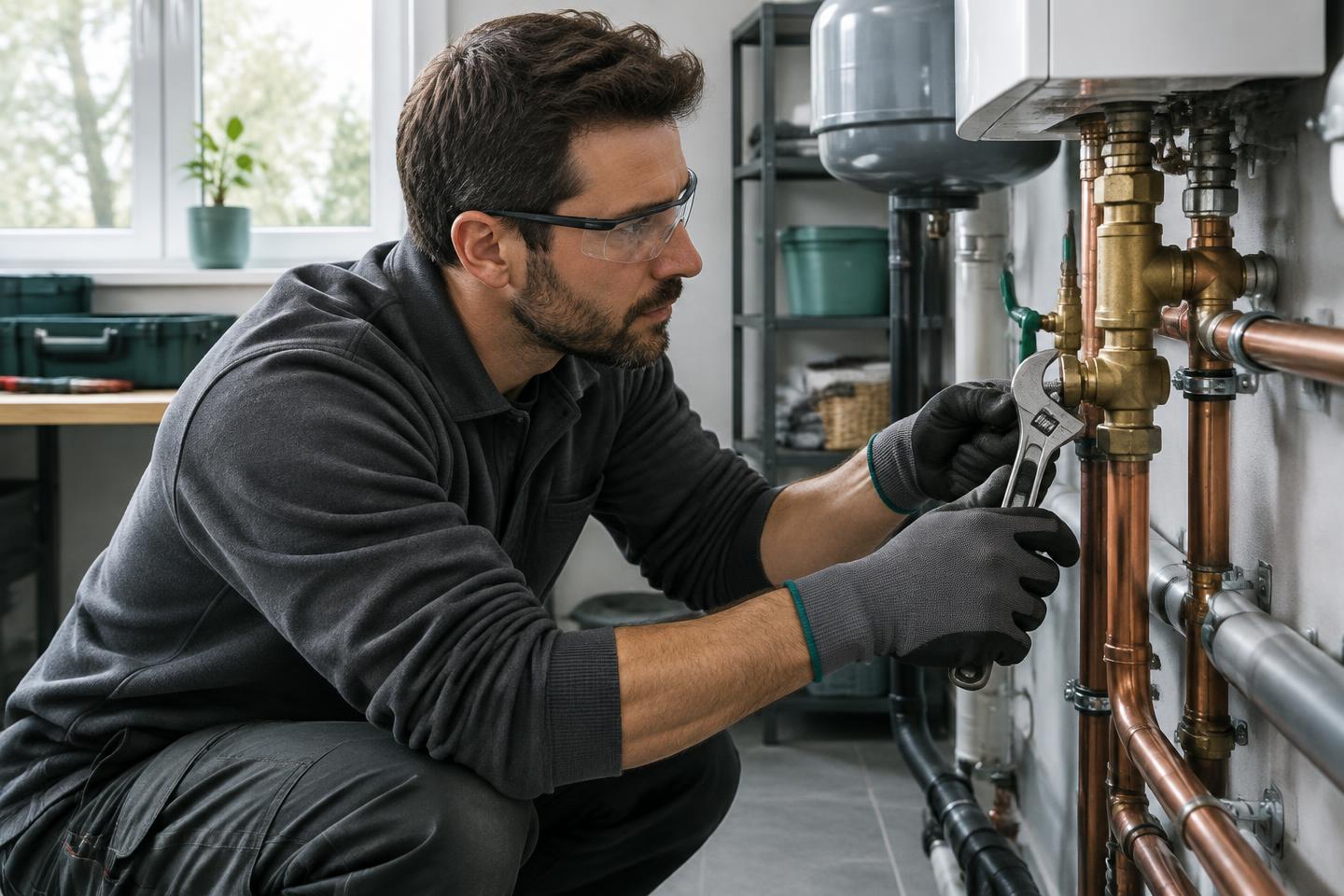
Every building is a little different. A plumber may need to trace an old installation, find the cause of an intermittent leak and work in a space that was never designed for easy access. The task is physical, but it also requires judgment.
Digital tools can help with documentation or diagnosis. Carrying out a repair still involves manipulating real materials, managing safety and adapting when the site does not match the drawing.
The insight behind Moravec’s paradox
Moravec’s paradox points to a longstanding contrast in AI: some formal reasoning tasks have proved easier to automate than the everyday perception and movement humans perform almost without thinking.
It is a useful lens, not a law that guarantees any occupation’s future. Robotics continues to advance, and the economics of deployment matter alongside technical capability.
The unstructured environment
On a service call, access, lighting, corrosion and previous repairs can all change the work. Knowing how much force to apply or when to stop may depend on tactile feedback and experience.
- Dexterity: handle fittings and tools where access is limited.
- Diagnosis: distinguish a symptom from the underlying cause.
- Judgment: choose a repair that meets safety and code requirements.
- Communication: explain the options and trade-offs to a customer.
AI may change the work around the wrench
Scheduling, estimates, inventory checks and customer communications are more structured than the repair itself. These tasks may be streamlined by software even when the hands-on work remains human-led.
A resilient plumber can learn to use helpful tools while retaining responsibility for the diagnosis and final result. Verify automated recommendations against site conditions and professional requirements.
Build the skills customers can trust
Technical competence, reliable service and clear explanations reinforce one another. Seek recognized training and supervised experience, and understand local licensing requirements.
No trade is immune to change. The practical goal is to strengthen the parts of your work that require adaptability, accountability and human trust.
Editorial note
Adapted from “Why AI Won’t Replace Plumbers Anytime Soon.” The original future-proof claims have been reframed as relative strengths, without promising immunity to automation.
Put the idea to work.
Explore plumbing roles and their transferable skills.
Explore related careers