
Energy & climate
The rise of the green-collar workforce
The energy transition is built by people. Where electricians, installers and heat-pump specialists fit into the next chapter.
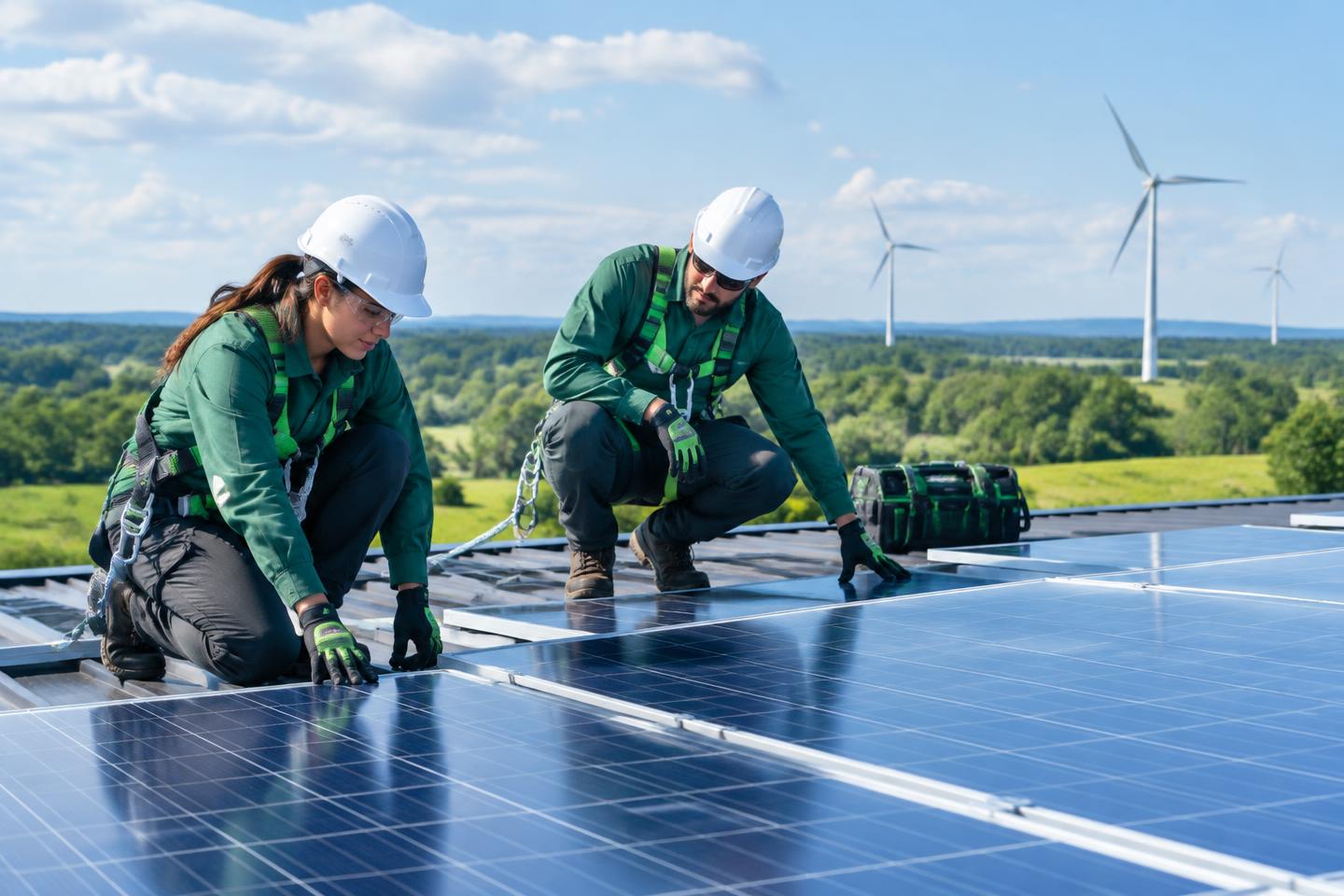
The short version
Look for skills that transfer across energy systems—not just a job title attached to one technology.
The transition is physical
The energy transition does not end when a policy is signed or a technology is announced. Solar panels must be installed, chargers connected, buildings upgraded and equipment maintained. That is where skilled trades meet the green economy.
“Green collar” describes work that supports environmental goals. For many tradespeople, it is less a brand-new occupation than a new application of familiar electrical, mechanical and construction skills.
Three places to look
Different technologies create different kinds of work. The opportunity is to understand the installation, service and safety requirements behind each one.
- Solar and storage: roof assessment, electrical installation, commissioning and maintenance.
- EV infrastructure: charger installation, load management, protection systems and fault finding.
- Heat pumps: system sizing, refrigerant handling, controls and ongoing service.
Build a transferable foundation
Electrical fundamentals, safe working practices and diagnostic ability travel further than expertise in a single product. Add technology-specific training to a strong trade foundation rather than treating a short course as a substitute for it.
Check whether training counts toward a recognized qualification. Licensing, supervised hours and permitted work differ by location, especially for electrical and refrigerant-related tasks.
Demand is local, not automatic
A growing sector does not guarantee steady work in every town. Project finance, incentives, grid capacity, construction cycles and permitting can all change the pace of hiring.
Before committing, speak to local employers, inspect actual job postings and ask training providers about placement outcomes. Look for service and maintenance demand as well as new installation projects.
A practical next move
Choose one nearby role and list the qualifications it requires. Compare that list with the skills you already have, then identify the smallest credible training step that closes a real gap. Your strongest pathway may be an adjacent specialization rather than a complete restart.
Editorial note
Adapted from the original green-collar article. The seed’s unsourced 40% demand claim and job-security guarantee have been removed. This is a career framework, not a current hiring forecast.
Put the idea to work.
Compare the skills behind renewable-energy careers.
Explore related careers